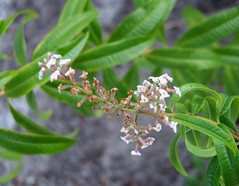
Lemon Verbena. Aloysia citriodora. The lemoniest of all the lemon herbs. This tropical shrub thrives in the summer producing lemon scented leaves that can be used as a tea or instead of lemon in salads and deserts. A good potpourri ingredient, too, and it was the favorite perfume of Scarlett O'Hara's mother.
Basil. Ocimum spp. What is summer without basil? Easy to grow and unsurpassed in the kitchen.
Patchouli. Pogostemon cablin. Loves our heat and humidity as long as you keep it shaded and well watered. Not a culinary herb, but widely used in the perfume industry and its scent will remind you baby boomers of the 60's.
Aloe. Aloe vera. Will tolerate drought but also thrives in our summer rainy season if given good drainage. Despite the fact that it looks like a desert plant, it will frequently bleach out under full sun, so try it in partial shade. A good plant to have around for healing burns and scrapes.
Garlic Chives. Allium tuberosum. A flat-leaved variety of chives that is nearly foolproof. Much easier to grow here than regular chives. Used as you would any chives, they add a subtle hint of garlic.
Culantro. Eryngium foetidum. If you love the flavor of cilantro (Coriandrum sativum) but are frustrated by even the "slow bolt" varieties quickly bolting in the heat, try culantro. It has nearly the exact flavor and will last throughout the summer. Spiny flower heads and spiny but soft leaves make this perennial an unusual looking addition to the garden.
Mexican Tarragon or Mexican Mint Marigold. Tagetes lucida. My favorite culinary herb. True French tarragon in impossibly difficult to grow here, but Mexican tarragon makes a very credible substitute and thrives in our hot, humid summers. Use in béarnaise sauce, tartar sauce, and on fish. Rewards you with pretty yellow flowers, too.
Cuban Oregano. Pletranthus amboinicus. The taste is similar to Greek oregano, but the leaves look nothing alike. Cuban oregano used to be classified as a coleus and, although fleshier, bears a resemblance to those plants including a number of colorful variegations. Give it plenty of room to spread.
Pineapple Sage. Salvia elegans. Most culinary sages struggle in the summer, but pineapple sage, like many ornamental sages, will thrive. It has pretty edible red flowers and leaves with a definite pineapple scent. Use in tea or as a garnish or simply enjoy its scent in the garden.
Lemongrass. Cymbopogon citratus. A nice tall clump of perennial grass with a light lemony flavor. The base of the blade makes a lovely tea and is often called for in Asian cooking.